Tesla Drops Cybertruck Plans For Oceania
The automaker has voided nearly seven years of reservations in Australia and New Zealand, offering refunds and FSD credits to switch to other models.
By Brianna Jackson ·
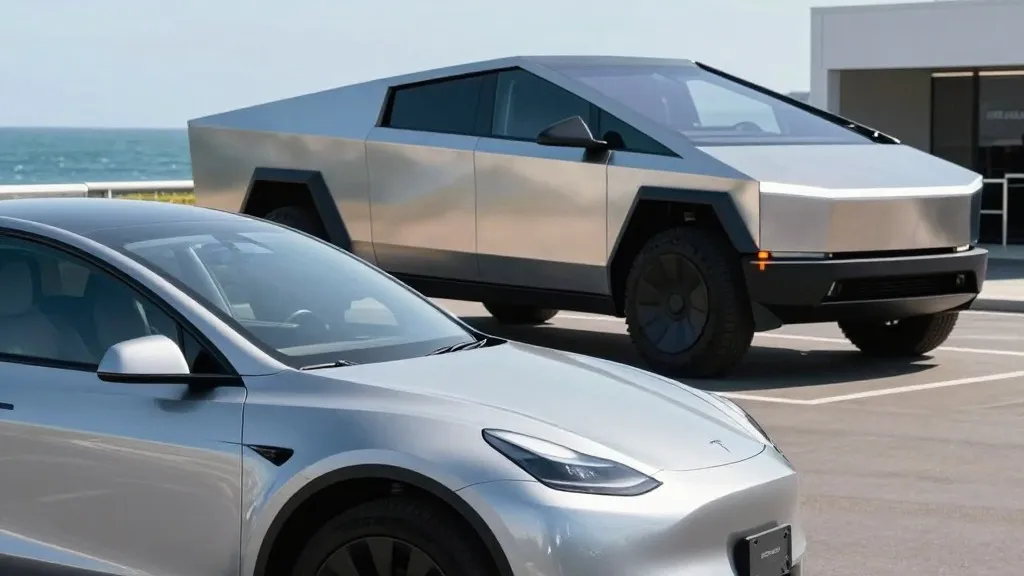
The electric pickup market in the Pacific region has just lost its most high-profile candidate. Tesla has officially terminated the Cybertruck program for Australia and New Zealand, ending a multi-year wait for right-hand-drive vehicles in those markets. The decision marks a definitive end to the automaker’s ambitions to bring the angular truck to the region, leaving reservation holders with refunds and a path toward other Tesla models.
The news broke via email to customers this morning, confirming that the long-held orders are now void. For nearly seven years, consumers in the region have watched the truck’s release date slip. The initial window for reservations opened in November 2019, when buyers could secure a spot for A$150. At the time, the vehicle was projected to start at roughly A$39,900, though the final product has since shifted in price and specifications. Tesla’s communication was brief, stating that after careful consideration, the plans to produce the vehicle for the region have been discontinued. As a result, the company can no longer fulfill the existing reservations and will cancel them immediately.
The timeline of this delay reveals a pattern of shifting priorities for the automaker. In May 2022, Tesla quietly removed the reservation page for Australia, replacing it with a button to receive updates, but did not immediately refund customers. Throughout 2024, the company maintained hope for a future launch, with CEO Elon Musk telling shareholders that certification for other markets might happen "next year." Despite a display tour that brought a physical truck to the region, no right-hand-drive version was ever produced. The core technical hurdle remained the vehicle's left-hand-drive design, which requires significant re-engineering and certification for markets like Australia and New Zealand, where right-hand drive is mandatory.
Financial realities appear to have been the final factor in the decision. Tesla’s international launches so far have been limited to left-hand-drive regions, including South Korea, the UAE, Saudi Arabia, Qatar, Jordan, and Israel. The truck remains blocked in the European Union due to pedestrian safety concerns. Internally, the sales volume for the Cybertruck has not justified the cost of re-engineering the platform. In the third quarter of 2026, Tesla delivered approximately 8,295 units in the "Other Models" category, a figure that now primarily reflects Cybertruck sales. This pace is estimated at roughly 30,000 units annually, a fraction of the 250,000-unit capacity of the production line. For a CFO, re-engineering for two markets with a combined population of 33 million is difficult to defend at that volume.
To ease the transition for loyal customers, Tesla is offering a consolation prize. Reservation holders who cancel their Cybertruck order and instead purchase a new Model 3 or Model Y will receive a free one-year subscription to Full Self-Driving (Supervised). This strategy aims to convert dead reservations into sales of vehicles that Tesla already builds for the right-hand-drive market. The company stated that full refunds for previous payments will be processed within 30 days. This move suggests Tesla is treating the Cybertruck as a niche product primarily for North America and other left-hand-drive regions, rather than a global flagship.
The cancellation comes just one day after Tesla reported its earnings for the third quarter of 2026. The timing underscores the company’s current focus on maximizing efficiency and profitability in its core markets. While some analysts had predicted this outcome for some time, the official communication puts an end to the uncertainty for thousands of customers. The Cybertruck’s journey in the Pacific region has been marked by long waits and shifting promises, but it is now officially over. Tesla moves forward with a streamlined international lineup, leaving the iconic truck to its domestic and select global audiences.
Source: Electrek